Anesthesiology and Reanimation
DEPARTMENT OF ANESTHESIOLOGY AND REANIMATION
The Anesthesiology and Reanimation Clinic of Süleyman Demirel University was founded in 1994 by Assist. Prof. Dr. Ali Dolgun. The first operations began in early 1995 in an operating room of the Isparta State Hospital that had been set aside for the use of the Faculty of Medicine. In mid-1996, the operating rooms in the city-center building of the Süleyman Demirel University Research and Application Hospital were opened, and service began in 4 operating rooms. At the end of 1996, a 4-bed Intensive Care Unit began providing service.
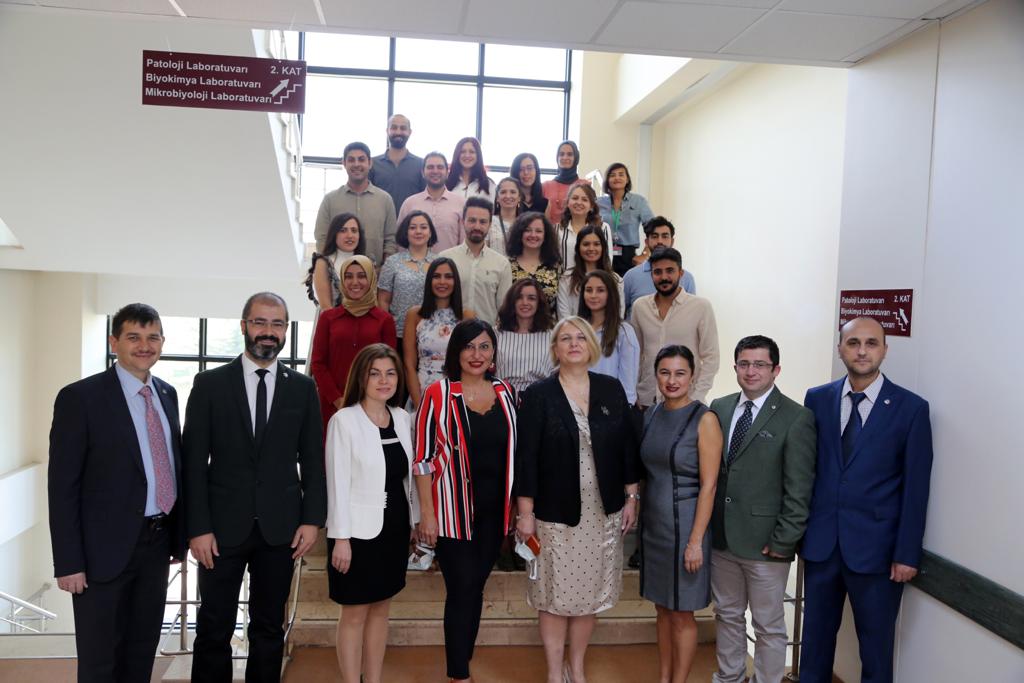
As of early 2001, service began in the current building of the Research and Application Hospital on the Çünür Campus of Süleyman Demirel University. Until 2013, service was provided with a total of 18 adult Intensive Care Unit beds and 14 Operating Rooms. In 2013, the Operating Rooms and the Intensive Care Unit were expanded and their capacity was increased. Our Department currently has 3 professors, 4 associate professors, and 2 assistant professors. The Department of Anesthesiology and Reanimation also includes the divisions of intensive care and algology.
OPERATING ROOM
As of 2020, in the Department of Anesthesiology and Reanimation within the Süleyman Demirel University Research and Application Hospital, service is provided in the operating room, with a total of 17 operating rooms, following a capacity increase, made available for the use of the departments of obstetrics and gynecology, general surgery, urology, orthopedics and traumatology, neurosurgery, otorhinolaryngology, ophthalmology, plastic and reconstructive surgery, pediatric surgery, cardiovascular surgery, thoracic surgery, gynecologic oncology, and surgical oncology. The average number of operations per day is around 60-70. In addition, there is a post-anesthesia care unit (recovery unit) with a capacity of 12 patients.
NON-OPERATING ROOM ANESTHESIA
In our clinic, sedation and other anesthesia procedures are also performed in units outside the operating room under the supervision of a faculty member. An average of around 3000 non-operating room anesthesia services are provided per year.
These units are:
Gastrointestinal endoscopic procedures,
ERCP (Endoscopic Retrograde Cholangiopancreatography),
EBUS (Endobronchial ultrasonography),
Urological lithotripsy (ESWL),
Interventional radiology procedures,
Cardiology Interventional Angiographic / Cardiac Procedures,
OPU in the IVF unit (In vitro fertilization),
Neurological interventional procedures
COVID-19 and ANESTHESIA
With the Covid-19 pandemic, whose first case in our country was seen in March 2020, training for both anesthesia residents and all hospital employees continues to be provided by our faculty members. Training in videolaryngoscope intubation and mechanical ventilators was given to resident physicians, and the training videos were uploaded to our hospital's website for the benefit of other health care workers.
Throughout the Covid-19 pandemic, efforts were made to continue elective (non-emergency) operations by spacing out the working intervals of the actively working operating rooms, and to continue a shift system 7 days/24 hours so as not to disadvantage patients. Intermittent working hours were applied to reduce the exposure of operating room staff. In addition, an isolated operating room was allocated for Covid-19 patients who needed surgery.
In the preoperative evaluation of elective operations, PCR tests were requested from patients in specific categories, in accordance with the guidelines recommended by the Ministry of Health. For patients who were to undergo emergency surgery, after their initial evaluations were completed in the ward and the emergency department, their temperatures were measured on entry to the operating room, they were evaluated by anesthesiologists, and they were always transferred wearing masks. Entries and exits to the operating room were kept to a minimum, and operations were carried out with the smallest possible number of staff. While intervening with the patient, the anesthesia team wore personal protective equipment (FFP3/FFP2 mask, goggles, face shield, and apron). Patients were intubated with the aid of a videolaryngoscope and by using an intubation cabin.
Suitable patients were allowed to wake up in the operating room and were transferred to the wards without being kept waiting in the post-anesthesia care unit. Transfers of patients were also carried out to appropriate standards, using transport cabins that allow safe intervention.
At the end of each operation, the rooms were cleaned in compliance with the cleaning and hygiene rules determined by the recommendations of infectious diseases specialists, and decontamination was provided under UV (ultraviolet) light for a certain period. No patient was ever admitted to an operating room whose cleaning had not been completed.
INTENSIVE CARE UNIT
The Adult Intensive Care Unit at the Süleyman Demirel University Faculty of Medicine was founded in 1993. Our intensive care unit, which started operating with 4 beds, increased its number of beds to 18 from 2001 and, over time, to 31. The Division of Intensive Care was established with the approval of the Council of Higher Education dated April 12, 2017.
As of 2020, our intensive care unit consists of 2 intensive care units, A and B. It has a total capacity of 31 beds. In total, 2 faculty members, 6 research assistants, 21 nurses, and 6 staff members work there.
In the intensive care unit;
Sepsis,
Shock,
Multiple Organ Failure,
Respiratory Failure Due To Acute And Chronic Lung Diseases,
Severe Pneumonia,
Clotting In The Lung Vessels (Pulmonary Embolism),
Heart Attack And Its Complications,
Sudden Cardiac And Respiratory Arrest,
Digestive System Bleeding And Obstructions,
Severe Liver And Kidney Failure,
Some Brain And Nervous System Diseases,
Trauma,
Coma,
Postoperative Care,
Severe Drug-Substance Etc. Poisonings,
adult critically ill patients such as these receive care and treatment at high standards, without interruption, 7 days a week, 24 hours a day, by a team of physicians, nurses, and staff.
With the Covid-19 Pandemic, intensive care unit B was allocated to Covid-19 patients, while the other intensive care unit, A, was reserved for other critically ill patients. To date, 600 patients with a diagnosis of Covid-19 have been treated in our allocated intensive care unit.
Covid-19 patients are kept isolated, and their care and treatment are carried out continuously by a team whose safety is ensured with personal protective equipment. For this purpose, the team caring for Covid-19 patients works separately.
Health care workers who follow this type of patient enter and exit the intensive care unit through separate places, and accordingly the clean (dressing room) – dirty (undressing room) areas have been rearranged. The personal protective equipment in the dressing room is used individually; in the undressing room, single-use items (coverall, gloves, FFP2/3 mask, cap, etc.) go into medical waste, and reusable equipment (boots, goggles, etc.) is cleaned in special solutions. To prevent contact, the dressing area, the undressing area, and the shower areas are continuously disinfected.
DIVISION OF ALGOLOGY
In pain clinics, where physicians specialized in the diagnosis and treatment of painful diseases work, the aim is to establish a diagnosis by clarifying the cause of pain in a patient who comes with a complaint of pain, to eliminate the pain through drug treatment or interventional methods or, in cases where the pain cannot be completely eliminated, to strive for rehabilitation by teaching ways of coping with the pain. In addition, because chronic pain is a problem that concerns many branches of medicine, another important function of pain clinics is to determine which physician the patient should consult because of the disease causing the pain, and to direct the patient to the right address.
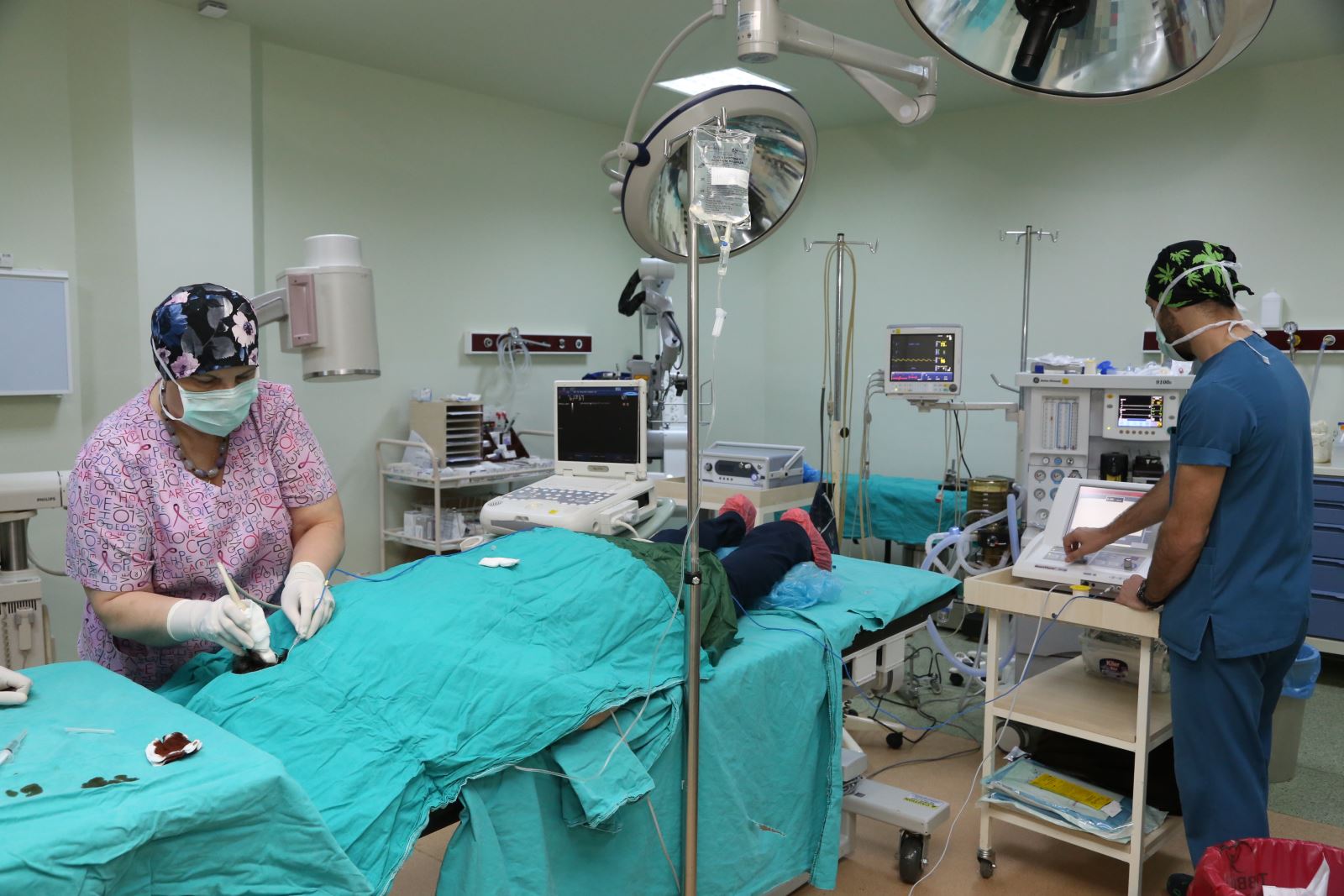
At Süleyman Demirel University, Algology services began in 2008 in the anesthesia outpatient clinic. In 2010, Algology services continued in the newly arranged Algology Outpatient Clinic and procedure room. In 2013, a 2-bed Algology ward also entered service.
In addition, in 2013, with a protocol signed with the Departments of Physical Medicine and Rehabilitation and Neurology, Algology subspecialty training was begun. To date, it has graduated 5 algology subspecialists.
An average of 2500-3000 patients are seen in the outpatient clinic per year, and an average of 1000 procedures are performed in the operating room per year. These services are run with an appointment system so that patients' treatments can be carried out without waiting.
The pain outpatient clinic and interventional pain treatment services, delivered in the algology (pain science) unit under the leadership of Prof. Dr. Pakize Kırdemir, are provided for chronic pain, especially cancer pain, as well as headache, joint, low back, and back pain and various pain syndromes, both through outpatient clinic follow-up and through interventional treatments in the operating room 5 days a week, 1 day of which is under fluoroscopy; at the same time, algology specialists are trained in our clinic within the algology subspecialty residency program.
Pains That Can Be Treated in the Division of Algology
Cancer pain
Headaches (Migraine, Tension Type, Cluster Type, Trigeminal Neuralgia, Other Primary headaches)
Neck pain (Cervical Facet Syndrome, Cervical Disc Herniation, Discogenic Pain, etc.)
Shoulder – Arm pain (Rotator Cuff Syndrome, Acromioclavicular and Glenohumeral joint osteoarthritis, etc.)
Back pain (Thoracic Facet Syndrome, Thoracic Disc Herniation, etc.)
Low back – leg pain ( Lumbar Facet Syndrome, Lumbar Disc Herniation, Sacroiliac Joint Pain, Discogenic Pain, Piriformis Syndrome, etc.)
Joint pain (Knee, Hip, Shoulder, etc.)
Pain due to vascular occlusion (Peripheral Arterial Disease, Buerger's Disease, etc.)
Heel Pain (Heel Spur, Plantar Fasciitis, etc.)
Pain due to Herpes Zoster
Pain due to Complex Regional Pain Syndrome
Coccyx Pain
Chronic Pain of Undetermined Cause
CONTACT: 0 246 211 21 20
INTENSIVE CARE: 0 246 211 20 87
ICU SECRETARY: 0 246 211 2084
ICU UNIT A: 0 246 211 20 88- 211 20 89
ICU UNIT B: 0 246 211 20 92
Head of Department
OUR PHYSICIANS
- Prof. Dr. Filiz ALKAYA SOLMAZ
- Prof. Dr. Berit GÖKÇE CEYLAN
- Assoc. Prof. Dr. Pınar KARABACAK
- Assoc. Prof. Dr. Eyyüp Sabri ÖZDEN
- Assoc. Prof. Dr. Mustafa Soner ÖZCAN
- Assist. Prof. Dr. Fahrettin KIRÇİÇEK
- Assoc. Prof. Dr. Ahmet BİNDAL
- Assist. Prof. Dr. Saniye CENGİZ
- Res. Assist. İsmail SAY
- Res. Assist. Nur AVCU
- Res. Assist. Şeküre BİLTEKİN
- Res. Assist. İrem MARAL KILIÇ
- Res. Assist. Sunguralp SONGURTEKİN
- Res. Assist. Bahar YALGIN GÜRBAZ
- Res. Assist. Akın DİŞİKIRIK
- Res. Assist. Duygu ÜÇEL ÇAYHAN
- Res. Assist. Murat ÖZÇELİK
- Res. Assist. Emre GÜL
- Res. Assist. Adnan FİDAN
- Res. Assist. Selver Tuana ÖZDEMİR
- Res. Assist. Hasan Ali İPEK
- Res. Assist. Yıldız DAĞCI
- Res. Assist. Beniz İNAL
- Res. Assist. İrfaniye AKIN
- Res. Assist. Taha Yasin IŞIKHAN
- Res. Assist. Kardelen KÖKSOY
- Res. Assist. Sevil PEKER İNAL
- Res. Assist. Serhat Gazi YİĞİT
- Res. Assist. Yiğit AKYOL
- Res. Assist. Yedağ ALP
- Res. Assist. Hazal YAŞAR
- Res. Assist. Mehmet YOLDAŞ
- Res. Assist. Turab AYGÜN
- Res. Assist. Hande Deniz KURBAN
- Res. Assist. Hilal AK
- Res. Assist. Sinan KIZILKAYA
- Res. Assist. Abdullah BÜLBÜL
- Res. Assist. Yunus KAHYA
- Res. Assist. Kübra DELEN KARAKOÇ
- Res. Assist. Hilal MAZMANOĞLU
- Res. Assist. Esra TATAR
- Res. Assist. Muhammed Sani ÇEVİK