Aikido Training
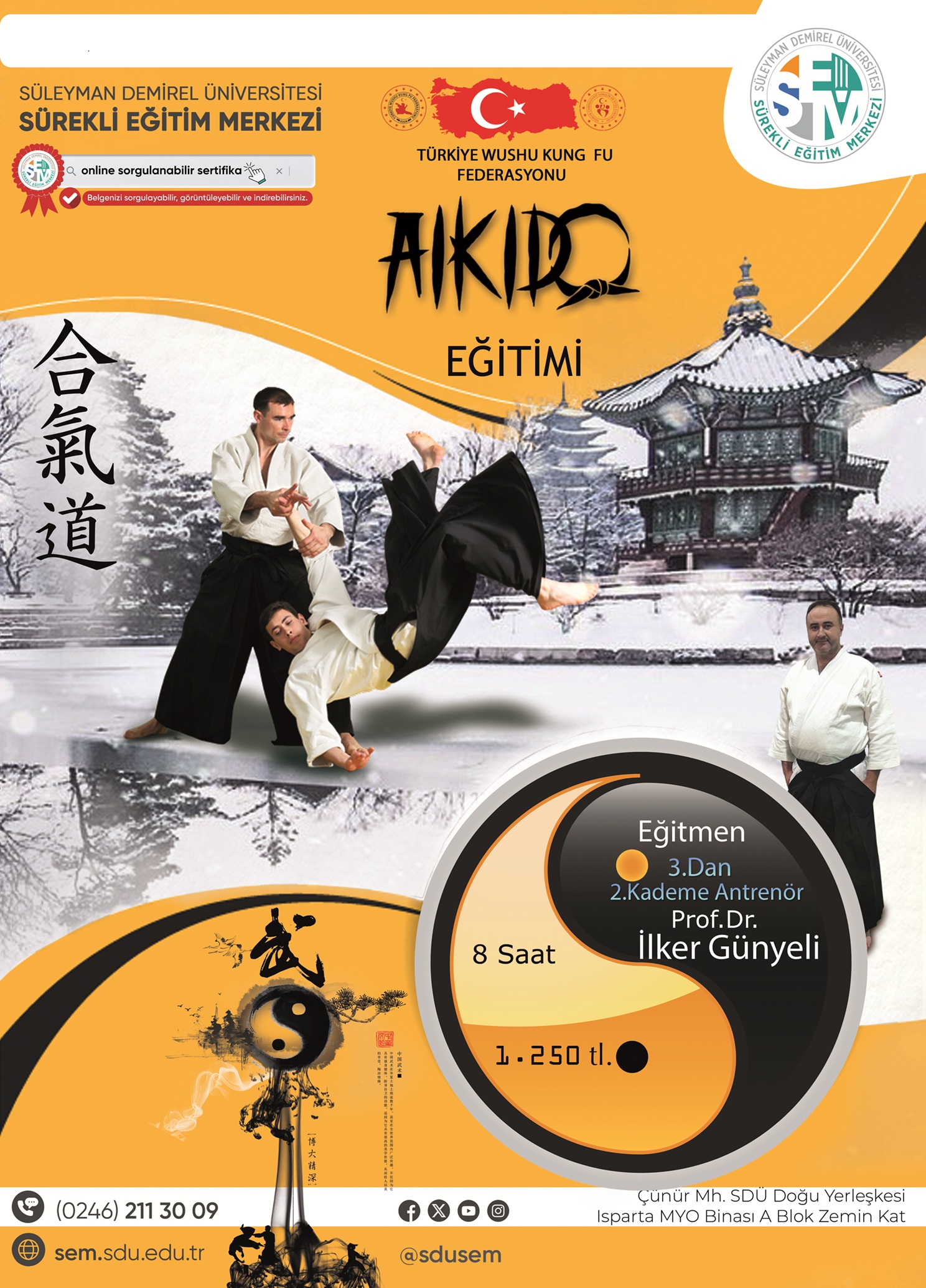
What is Aikido? – The Art of Harmony and Self-Defense Aikido is a traditional Japanese martial art that aims to neutralize an attacker's force through harmony and balance rather than redirecting it back toward the opponent. It is based on a philosophy of not striking back harshly, but rather turning an opponent's energy to your advantage. ---
Basic Philosophy
"Ai" (Harmony) – "Ki" (Energy) – "Do" (Way) = The way of harmony with energy
Aikido's purpose:
- To resolve conflict, not to fight
- To control an opponent without causing harm
- To provide mental maturity alongside physical development
Aikido was developed by its founder Morihei Ueshiba (O-Sensei) as both a martial art and a teaching of peace. Aikido is not a simple short-term course training. It is a long-term process. For those who wish to continue after initial training, a license will be issued. Training without a license is not permitted. Belt examinations for Aikidoka (practitioners of Aikido) will be held every 3-5 months depending on the individual's progress.
What is Learned in Aikido?
- Technical Training
- Joint locks
- Throwing techniques (nage waza)
- Rolling and falling techniques (ukemi)
- Evasion and directional change from attacks
- Weapon Training
In traditional training, to develop body-mind unity:
- Bokken (wooden sword)
- Jo (staff)
- Tanto (wooden knife) practice is conducted
Physical and Mental Gains
Aikido is not just self-defense; it is a path of personal development:
- Balance and coordination improve
- Posture and flexibility develop
- Stress decreases
- Concentration increases
- Self-confidence is gained
- Nonviolent communication and composure are learned
Who Can Practice?
The best feature of Aikido is:
"It is based on technique, not strength"
Therefore:
- Children
- Women
- Older adults
- People who have not previously participated in sports
Everyone can learn safely.
How is Aikido Different from Other Martial Arts?
- No forceful strikes; not focused on punches/kicks
- Defense and redirection
- Defense-first approach
- The goal is not to injure but to neutralize the opponent
- Strong philosophical teaching
- Typically non-competitive
There is No Competition in Aikido
In Aikido:
- There are no tournaments
- There are no opponents, only partners
IN CONCLUSION:
The goal is not to exceed others' development, but to develop oneself. Aikido is not merely a self-defense art, but a discipline of living life in balance.
"Aikido teaches harmonious response, not force against force."